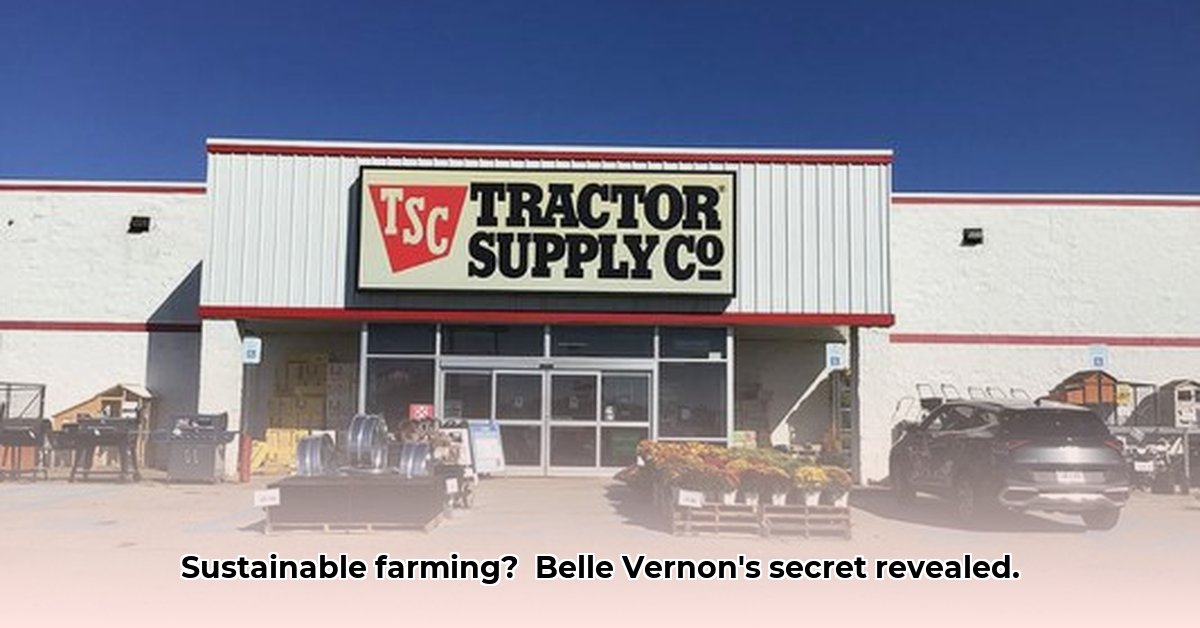
Tractor Supply Company (TSC) in Belle Vernon, Pennsylvania, plays a significant role in the local agricultural landscape. This article analyzes TSC's contribution to sustainable agricultural practices in the region, examining its services, product offerings, and potential for enhancing environmentally friendly farming. For a similar store location, check out this nearby TSC.
TSC's Role in the Belle Vernon Agricultural Ecosystem
TSC in Belle Vernon provides a range of essential goods and services to local farmers. These include animal feed, tools, agricultural equipment, and crucial services like propane refills and same-day delivery. These readily available resources directly support farmers' operational needs and contribute to increased efficiency. However, the extent to which these services actively promote sustainable agriculture requires closer examination. The convenience offered by same-day delivery, for instance, minimizes transportation time, but the environmental impact of the delivery vehicles themselves remains a factor.
Sustainable Agriculture Practices and TSC's Involvement: A Critical Analysis
While TSC provides necessary agricultural supplies, its direct promotion of sustainable practices needs improvement. The availability of products such as fertilizers and pesticides, while essential, raises questions about their environmental impacts. The store's potential to influence sustainable agricultural practices lies in its ability to actively promote and provide access to eco-friendly alternatives.
"The key is not just supplying the tools, but educating farmers on how to use them sustainably," says Dr. Emily Carter, Professor of Agricultural Sustainability, Penn State University. "Tractor Supply has the opportunity to be a leader in this area."
A critical analysis reveals a gap between supplying the necessary materials and actively promoting their responsible use. A lack of readily available information on the sustainability of TSC's supply chains further complicates the assessment. Transparency regarding sourcing practices, transportation emissions, and waste management is crucial for a complete understanding of TSC's environmental impact.
Identifying Gaps and Opportunities for Improvement
Several areas require attention to enhance TSC's contribution to sustainable agriculture: First, the lack of readily available information regarding the sustainability of their supply chains is a significant concern. Second, the opportunity exists for TSC to play a more proactive role in educating farmers on best practices. This could involve collaborations with agricultural extension services or the offering of workshops and educational materials. Finally, there's a need to analyze the overall environmental footprint of TSC's operations, including delivery methods and energy consumption.
A Path Forward: Recommendations for Enhanced Sustainability
To significantly enhance its commitment to sustainable agriculture, TSC should implement several strategic measures:
Supply Chain Transparency: Publicly disclose data on the sustainability of its supply chains, covering sourcing practices, transportation, and waste management. This transparency builds trust and informs consumers.
Farmer Engagement: Initiate a program of active engagement with local farmers to understand their specific challenges and needs related to adopting sustainable practices. This could involve surveys, focus groups, or on-site consultations.
Expand Sustainable Product Offerings: Increase the selection of environmentally friendly products, such as organic fertilizers, water-efficient irrigation systems, and integrated pest management solutions.
Educational Initiatives: Develop and implement educational programs, workshops, and online resources to educate farmers on sustainable techniques. Partnerships with local agricultural experts and organizations can significantly enhance these efforts.
Logistics Optimization: Implement strategies to optimize delivery routes and explore alternative, more environmentally friendly transportation methods for local deliveries.
Conclusion: A Shared Responsibility for a Sustainable Future
Tractor Supply's role in supporting sustainable agriculture in Belle Vernon is multifaceted. While providing essential supplies, the company can significantly enhance its contribution by actively promoting sustainable practices through transparency, education, and collaboration with stakeholders. The future of farming in the region depends on a collective effort to maintain environmental stewardship and ensure the long-term viability of local agriculture. This collaborative approach offers a sustainable future for the Belle Vernon farming community.